Characteristics

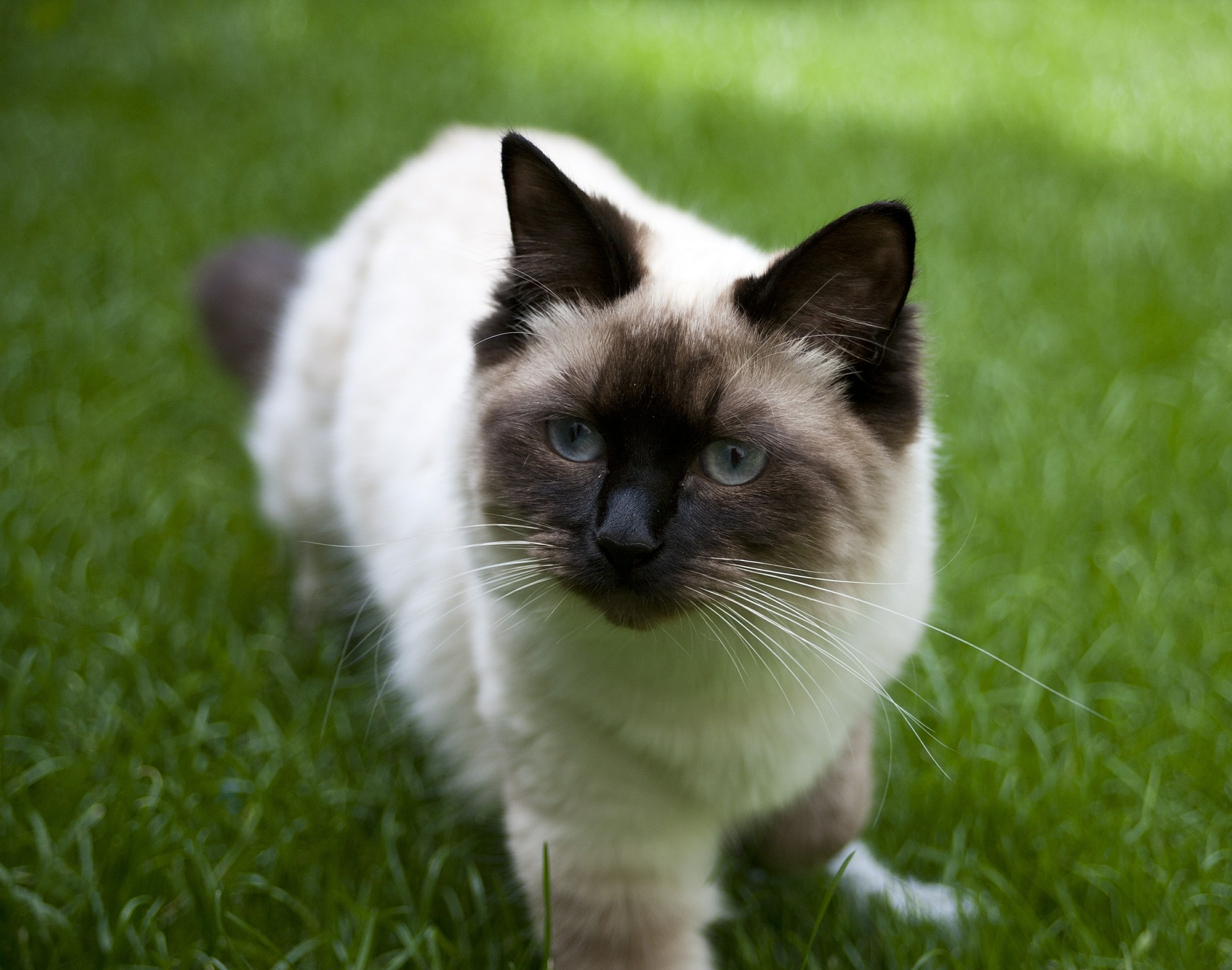
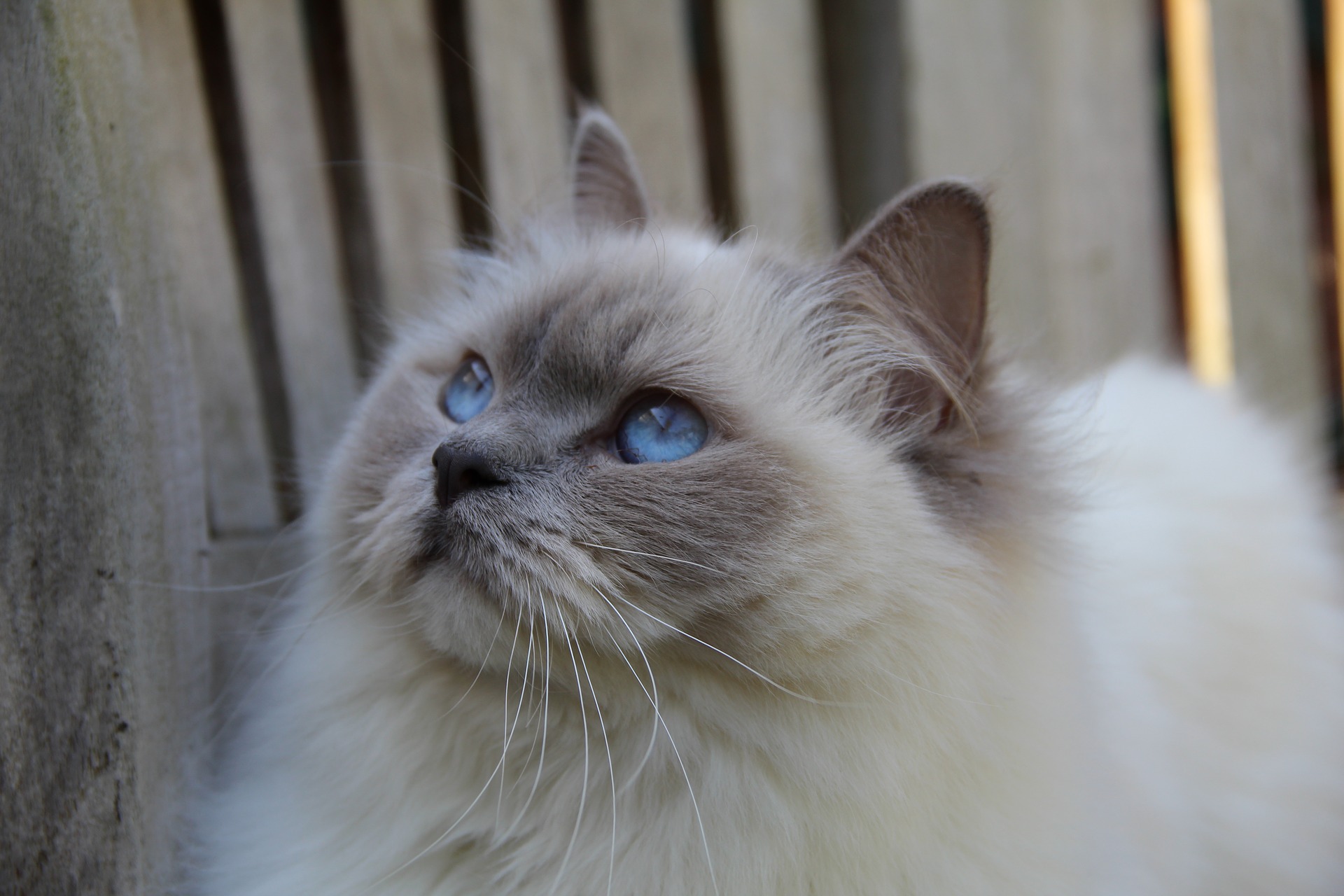
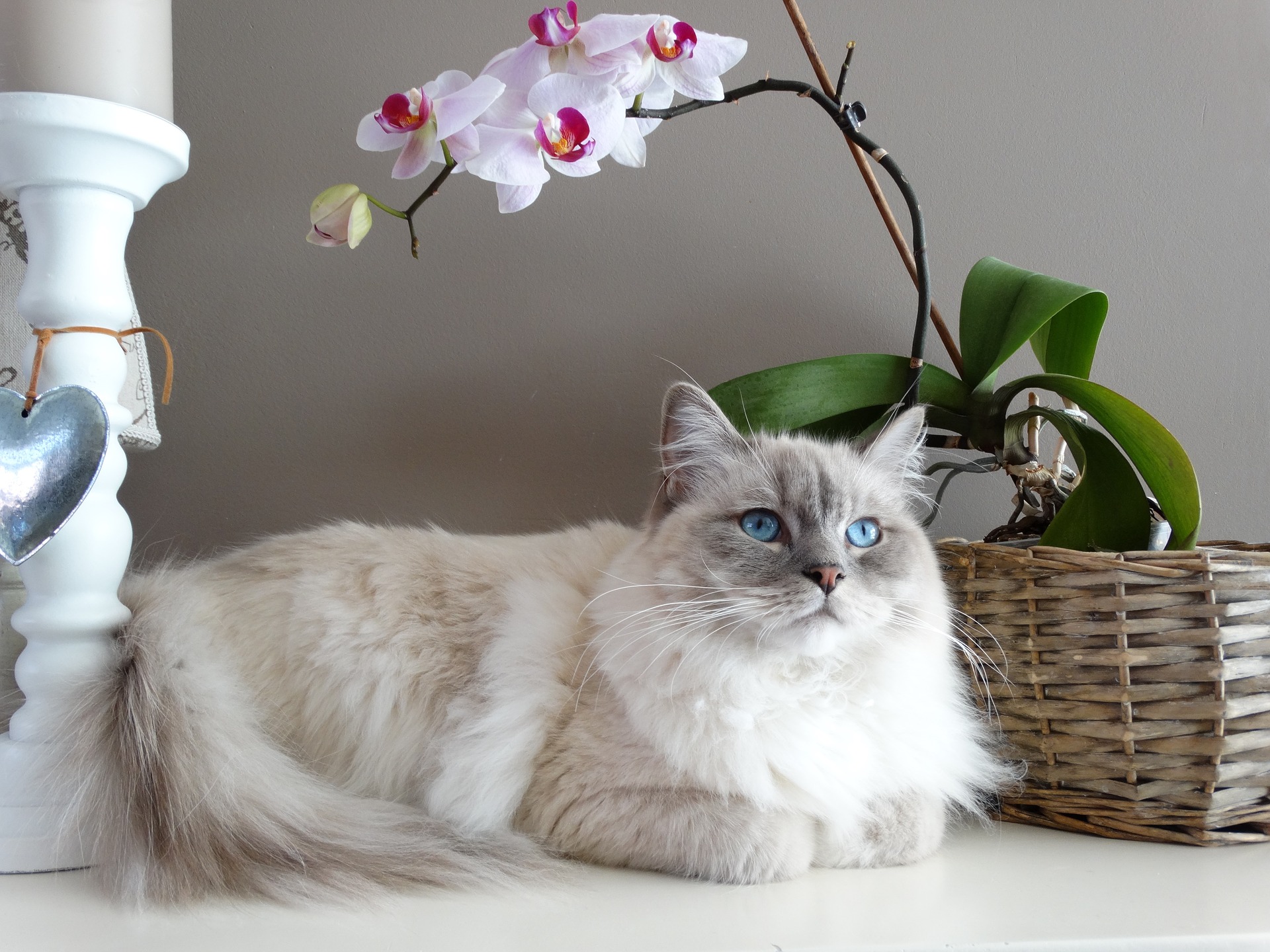
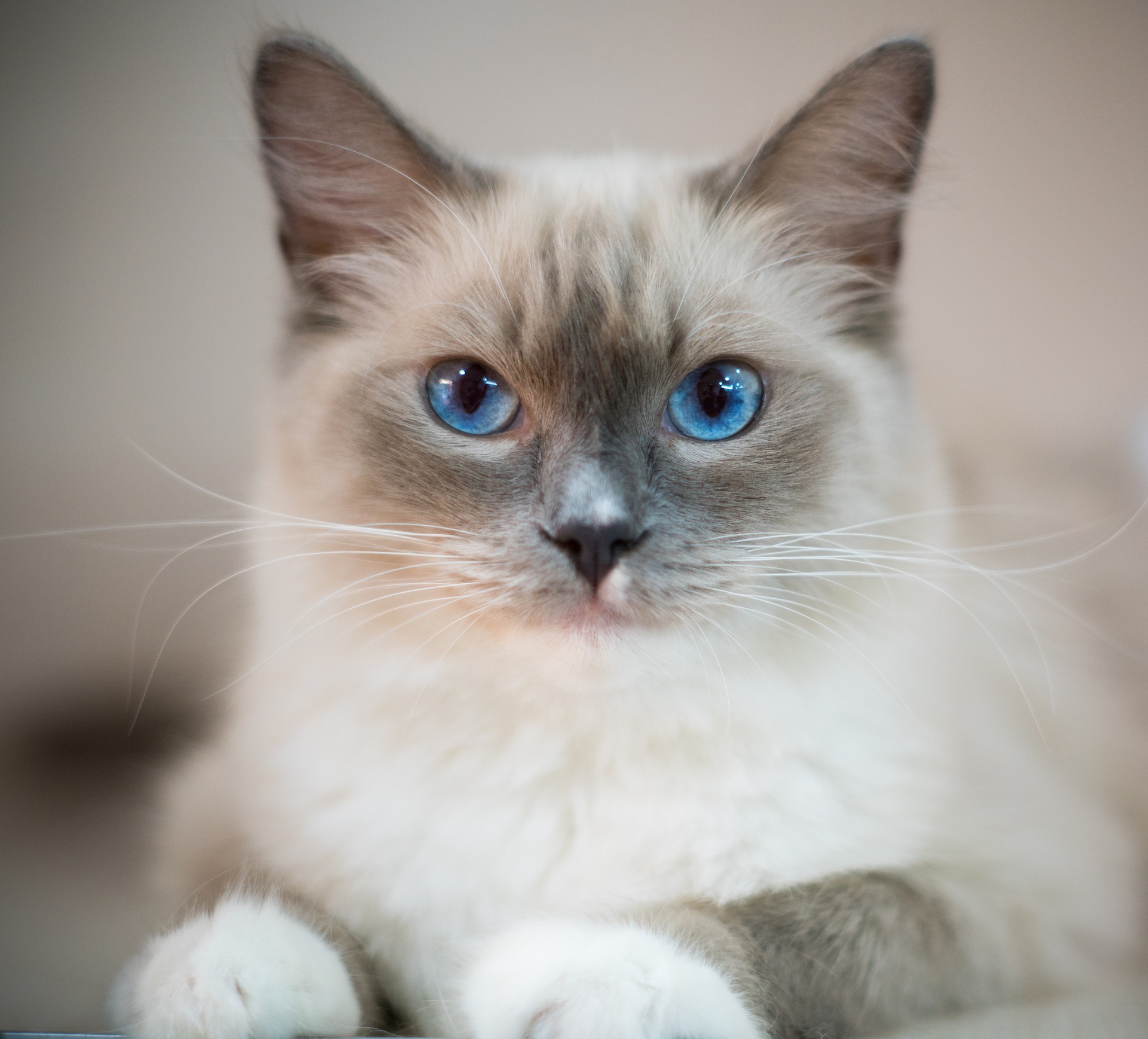
Ragdolls are large, laid-back, semi-longhaired cats with captivating blue eyes. The Ragdoll is a pointed breed, which means that the body is lighter in colour than the points (the face, legs, tail and ears). The Ragdoll cat is carefully bred to produce large, affectionate animals in three patterns: two with white (mitted and bi-colour) and one with no white (colourpoint). The ideal Ragdoll is a well-balanced cat, with no extreme features. Altered males will usually top the scale at 9 to 10 kilos; females are proportionately smaller and usually weigh between 4.5 and 6.5 kilos at maturity. Ragdolls are slow-maturing, reaching full coat colour at two years, and full size and weight at four.
Ragdoll cats tend to be more interested in humans than some breeds of cats. They are known to run to greet you at the door, follow you from room to room, flop on you, sleep with you, and generally choose to be where you are. Many Ragdolls have been taught to come when called and play fetch.
They are gentle cats, and usually play without extending their claws. Ragdolls tend to be floor cats, not jumpers. The Ragdoll’s semi-long coat is plush and silky, and requires minimal grooming to keep it looking its best. They should be combed with a steel comb on a regular basis to find and remove any loose hair or tangles. Quality coats consist mainly of long, soft guard hairs. Ragdolls, just like all breeds of cats, will shed, usually with the change of seasons. The absence of the thick, dense, insulating undercoat results in reduced shedding and matting. In all, Ragdolls are well-behaved and easy to care for – perfect for our modern, busy lifestyles.
There are four patterns: bi-colour, van, mitted and colourpoint. Patterns come in six colours: seal, blue, chocolate, lilac, red, and cream. Points may be solid, lynx, tortie, or torbie (tortie and lynx). If you do the math, you can see that there are quite a large number of different combinations possible!
Colourpoint Ragdolls have the classic pointed markings with no white anywhere in their coat. Mitteds have white feet in the front and white boots that go all the way up and around the hock in the back, a white chin and a belly stripe. Mitted Ragdolls may have a blaze, star or hourglass-shaped patch of white on their forehead and nose. Bi-colours have more white; all four paws, their underbodies, chest, and an upside-down ‘V’ marking on their faces are white. They may have a splash or two of white on their backs. Only their tails, ears, and the outer part of their masks show the darker markings. In the Van pattern, only the top of the mask, ears, and tail, and perhaps a few spots on the body, show darker markings.
Ragdolls were developed in the 1960’s by Ann Baker, a breeder in Riverside, California. The origin of the Ragdoll breed consisted almost entirely of free-roaming cats. Ann bred Josephine, a domestic longhaired white female that was found running loose in her neighbourhood, to other cats she owned or found. The offspring of this female had unique temperament traits that were very endearing. By selecting individuals with the look, temperament and criteria she wanted for her breeding program, she created the Ragdoll breed.
Did You Know?
The Ragdoll loves to be cuddled and is much more accepting than many cats of being carried around in his owner’s arms. The large, affectionate Ragdoll goes limp with pleasure when you cuddle him in your arms, the trait that led to his name. He’s a big kitty, with males ranging up to 20 pounds, females slightly smaller, starting at 10 pounds and going up to 15 pounds.
The Ragdoll gazes up at you with beautiful baby blues, eager to follow wherever you go. He’s a friendly cat who will greet you happily at the door, play fetch and sleep with you at night. Sturdy and tolerant, he can be a child’s best friend, willing to be dressed up in doll clothes and pushed around in a baby buggy. Just make sure your child doesn’t take advantage of his good nature. The laid-back Ragdoll can even get along well with dogs and, like them, can learn to walk on a leash. He’s a great choice if you travel frequently and would like to bring a feline companion along.
The breed was created in the 1960s from matings of three cats of unknown heritage. Today the semi-longhaired cats come in four patterns (mitted, van, bicolour and colourpoint) and six colours (seal, blue, chocolate, lilac, red and cream) for a variety of looks in the breed. The cats mature slowly, reaching their full size when they are four years old.
The Ragdoll is well suited to any home with people who will love him and give his gorgeous coat a weekly combing. Keep him indoors to protect him from cars, diseases spread by other cats and attacks from other animals.
Ragdoll Cats Are “Man’s Best Companion.”
Kindly borrowed from
http://www.vetstreet.com/cats/ragdoll
http://www.ragdoll-cats.com/descrip.htm
Description of their temperament
If a dog is “man’s best friend,” then it must also be said that Ragdoll cats are “man’s best companion.” More than pets, Ragdolls are true companions. The Ragdoll cat has many special features. The Ragdoll’s sweet temperament is probably its most outstanding trait.
Ragdolls are large, bulky and handsome cats. They have been commonly referred to as “the gentle giants” – because in spite of their handsomeness and grace, they are extremely even-tempered and docile.
Able to steal your heart and make you wonder exactly who owns who, Ragdoll cats quickly adapt. They fit right into your life and fill it with “Ragdoll Magic!”
Ragdoll cats charm their owners with funny, as well as tender moments. The character traits of this breed alone make it special! However, the physical aspects, build, and “looks” of the breed will further impress your fancy.
Originally, as the Ragdoll breed was introduced to us by Ann Baker, it consisted of 3 distinct colour patterns. Since then, through careful consideration and monitored breeding, the breed has expanded.
All Ragdolls have blue eyes. Ragdolls now come in any of the following 6 colours: Seal Point, Blue Point, Chocolate Point, Lilac Point, Red Point, and Cream Point.
Ragdolls have unique personalities.
They are loving, placid and easy-going, quiet cats.
Ragdolls love being with people. This makes them excellent companions for children and adults alike!
Sweet and Docile,
Ragdolls are not “fighter” cats. They view any newcomer as a loving entity. For this reason, Ragdolls are strictly indoor cats.
Ragdolls display many characteristics traditionally attributed to dogs:
retrieving toys, loyalty to their owner, following you around everywhere, paying attention to what you are doing all the time and being very devoted to you.